Levana Finance

Client: Levana Finance
Role:Senior Product Design Consultant
Category: Perpetual Swaps
Focus: Trading UX, onboarding, and risk systems
Timeline: Jul 2023 – Feb 2026

Overview

Levana Finance is a decentralized perpetual trading platform built on the Cosmos ecosystem, enabling users to trade leveraged positions directly on-chain.

I worked on redesigning the core trading experience to reduce user error, improve risk clarity, and streamline trade execution in a highly complex and high-stakes environment.

Over 24 months, Levana scaled to 30,000+ users and facilitated $4B+ in trading volume, with design improvements contributing to increased usability, trust, and activation.
Trade

  • 50x leverage, long and short
  • Adjustable fees
  • Market neutral trading strategies

Earn

  • Real yield for liquidity providers
  • Multiple risk-adjusted options

DAO

  • Vote on Proposals
  • Shape Levana’s Future
  • Stake and Earn

My Role & Approach

As a Senior Product Design Consultant, I led the redesign of key trading flows, focusing on clarity, speed, and risk-aware decision-making.

My responsibilities included:

  • Leading UX/UI design for trading and position management
  • Simplifying complex financial interactions into intuitive flows
  • Collaborating with product and engineering on feature prioritization
  • Designing for both novice and advanced users
Discover

Understand user behavior and friction

Design

Simplify complex trading interactions

Deliver

Ship and refine in production

The Challenge

Despite strong technical foundations, the product introduced friction that limited usability and adoption.

Key challenges included:

  • Users managing positions without real-time market context
  • Complex collateral requirements creating multi-step friction
  • High cognitive load during critical trading decisions
  • Lack of clear feedback during blockchain transactions

Problem 01

Managing positions without market context

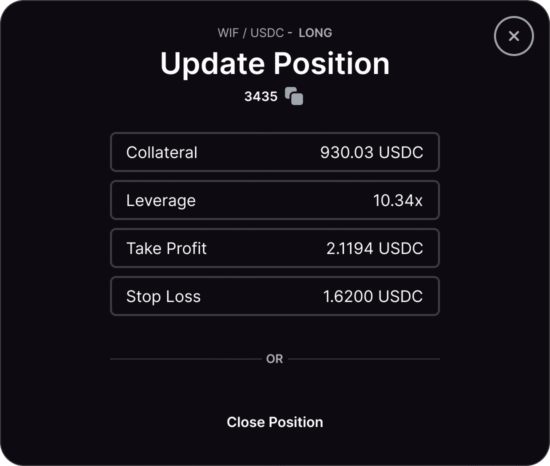
Position management lived inside a modal that covered the price chart. Traders were adjusting leverage without seeing real-time market context.

Problem 02

Friction in funding positions

Opening a position might required a separate swap first. Traders had to calculate exact amounts, open a modal, swap, then return to the chart view.

Problem 01​

Managing positions without market context

Position editing was handled inside a modal that obscured the trading chart.

This created critical issues:

  • Users adjusted leverage without seeing real-time price movement
  • Important actions like “Close Position” were visually ambiguous
  • Loss of context increased user anxiety during high-risk decisions

Solution 01

From modal to immersive editing

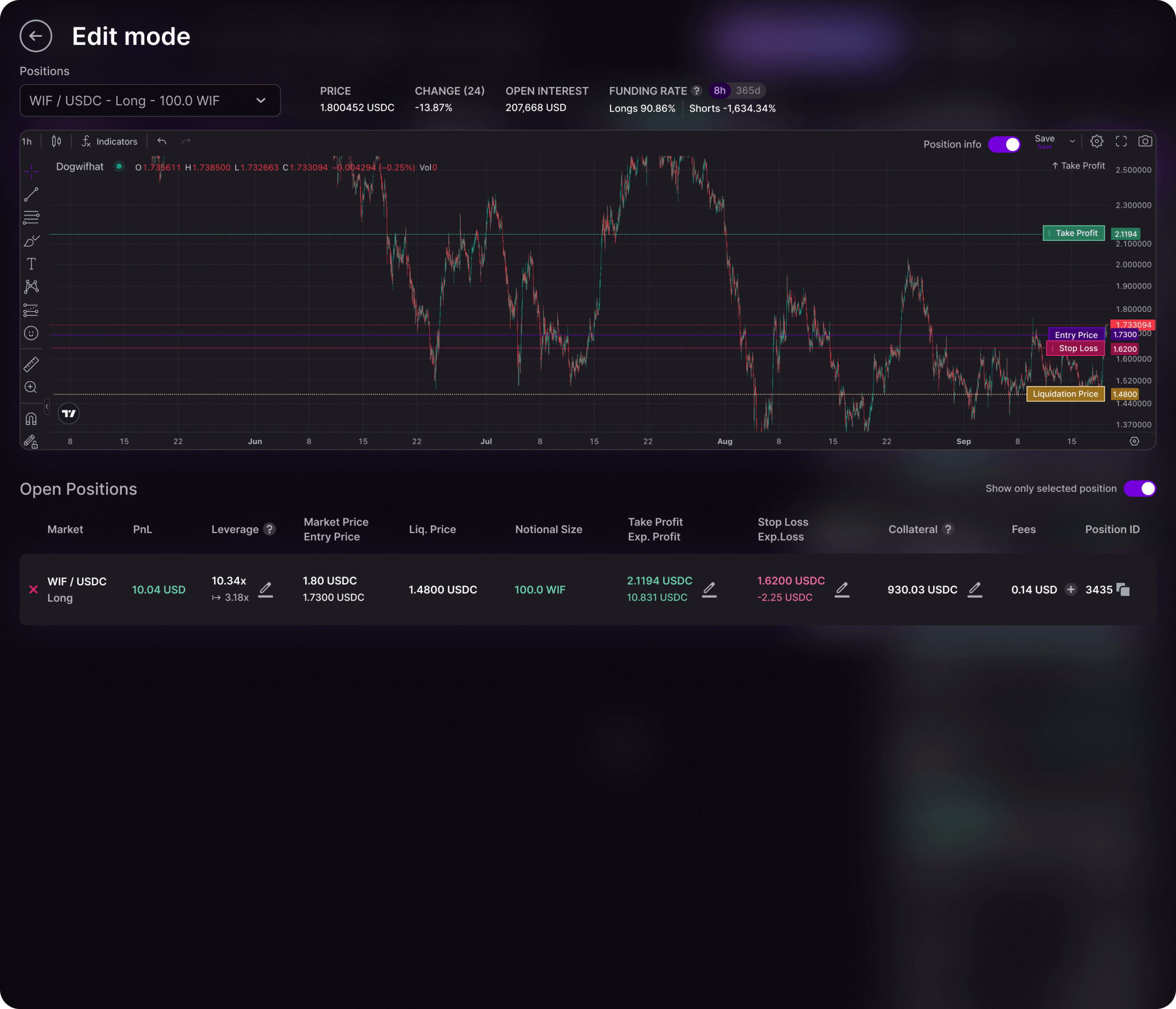
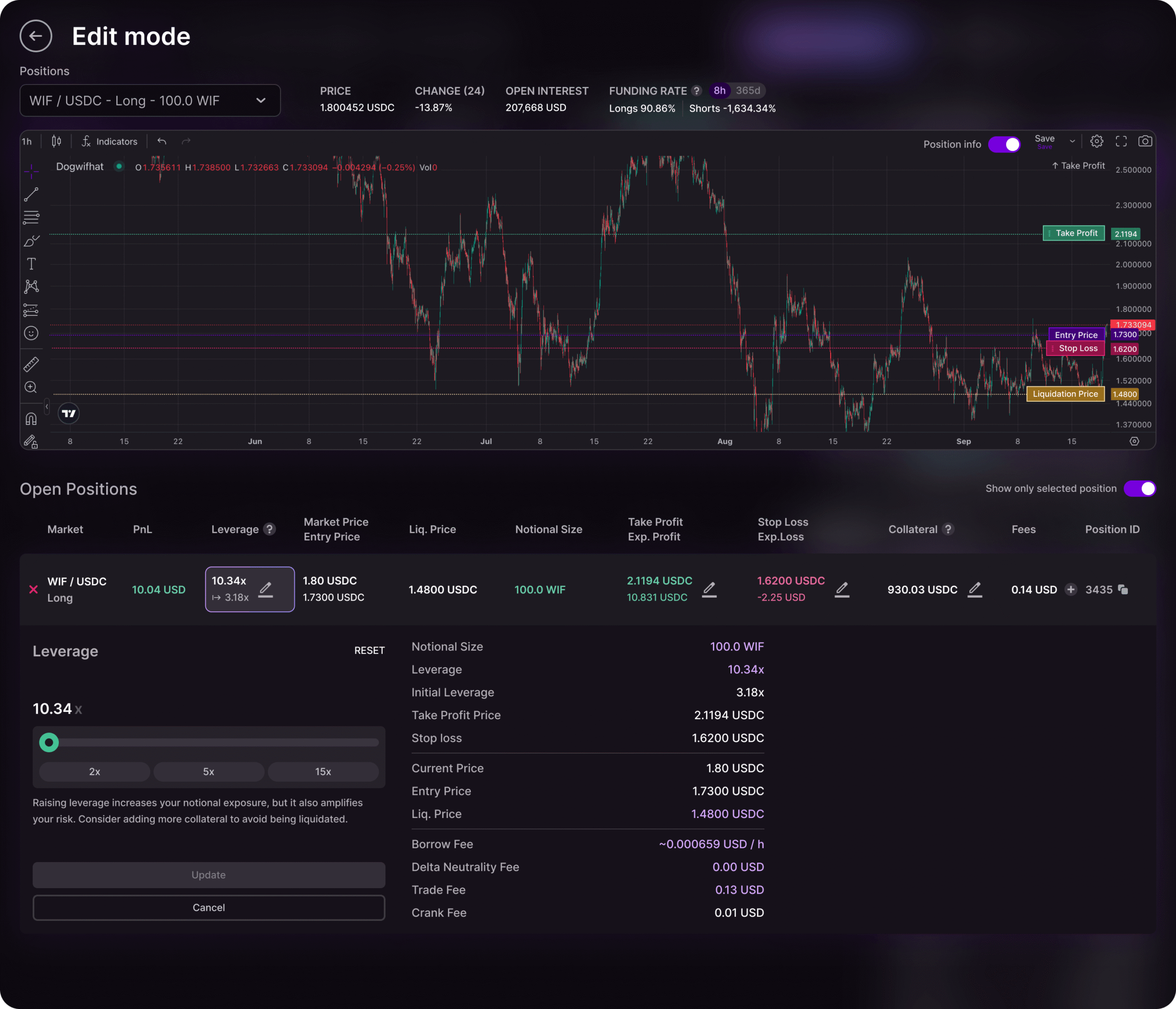
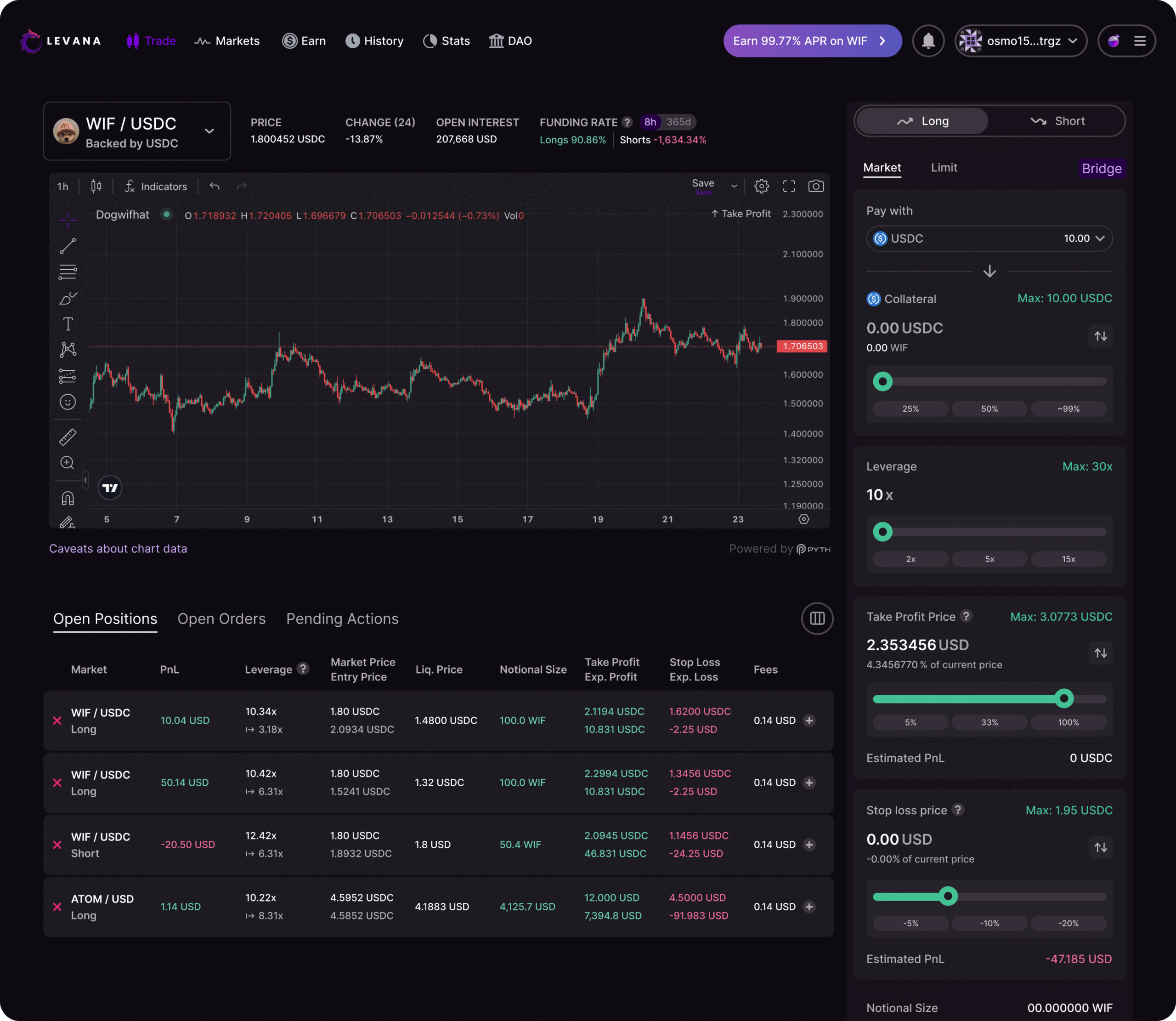
I replaced the modal with a dedicated editing workspace integrated into the trading interface.

Key improvements:

  • Persistent chart visibility → users retain market awareness
  • Inline editing controls → faster and more precise adjustments
  • Clear action hierarchy → destructive actions are visually distinct

WIF/USDC trade market page with some WIF and ATOM positions open

By cliking on a row, user opens the edit mode

By cliking on a value it opens the respective input with the impact of the change highlighted in light purple

Problem 02

Friction in funding positions

Opening a position required users to already hold the correct collateral asset.

This forced users to:

  • Leave the trading flow
  • Perform manual swaps
  • Calculate amounts before knowing final position size

Solution 02

“Pay with” unified collateral system

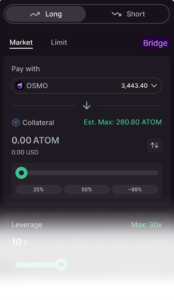
I introduced a “Pay with” feature allowing users to fund positions using any token in their wallet.

Key improvements:

  • Integrated asset selection directly in the trade flow
  • Automatic swap execution at confirmation
  • Eliminated the need for pre-calculation and external steps

UX Logic

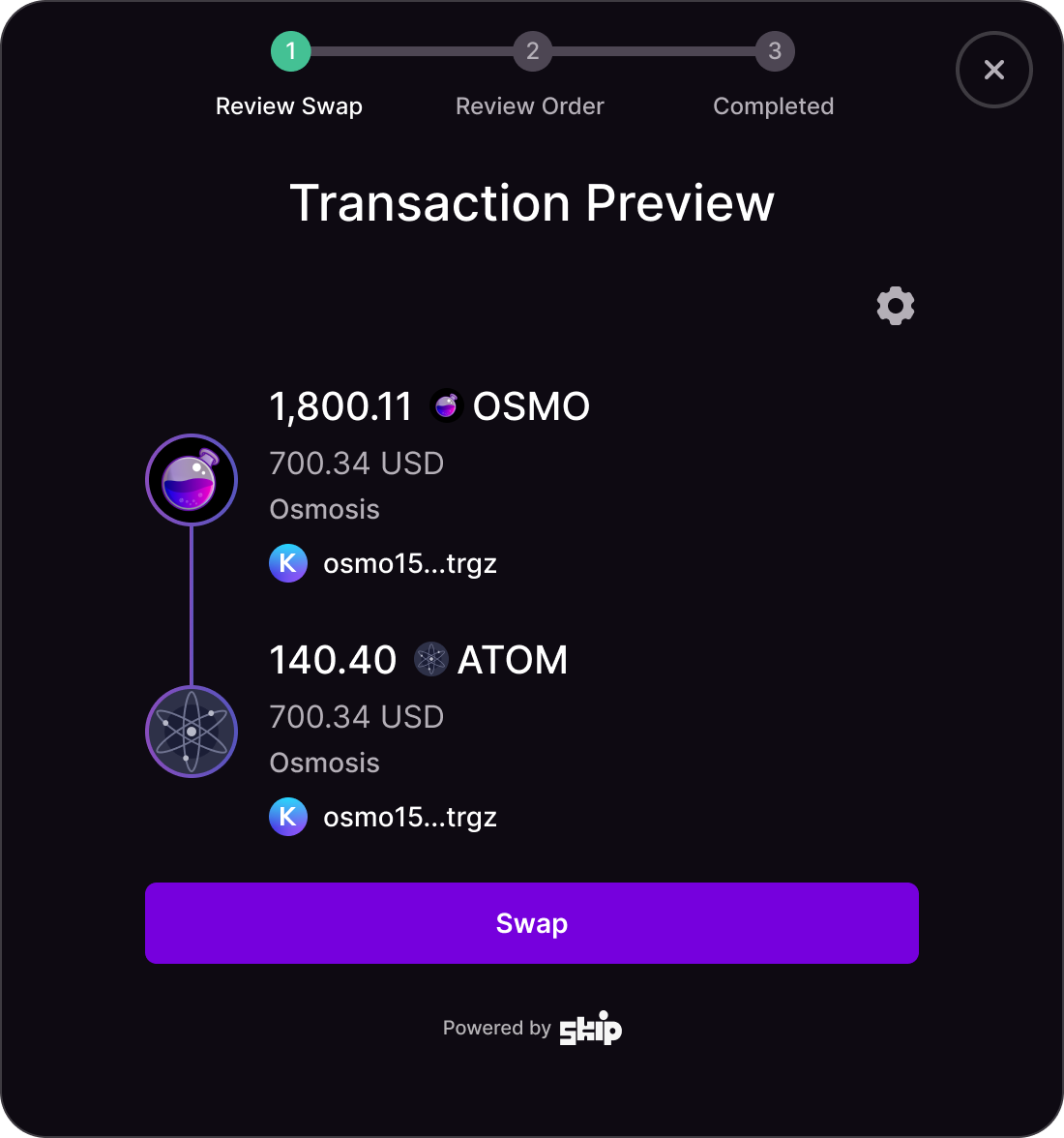
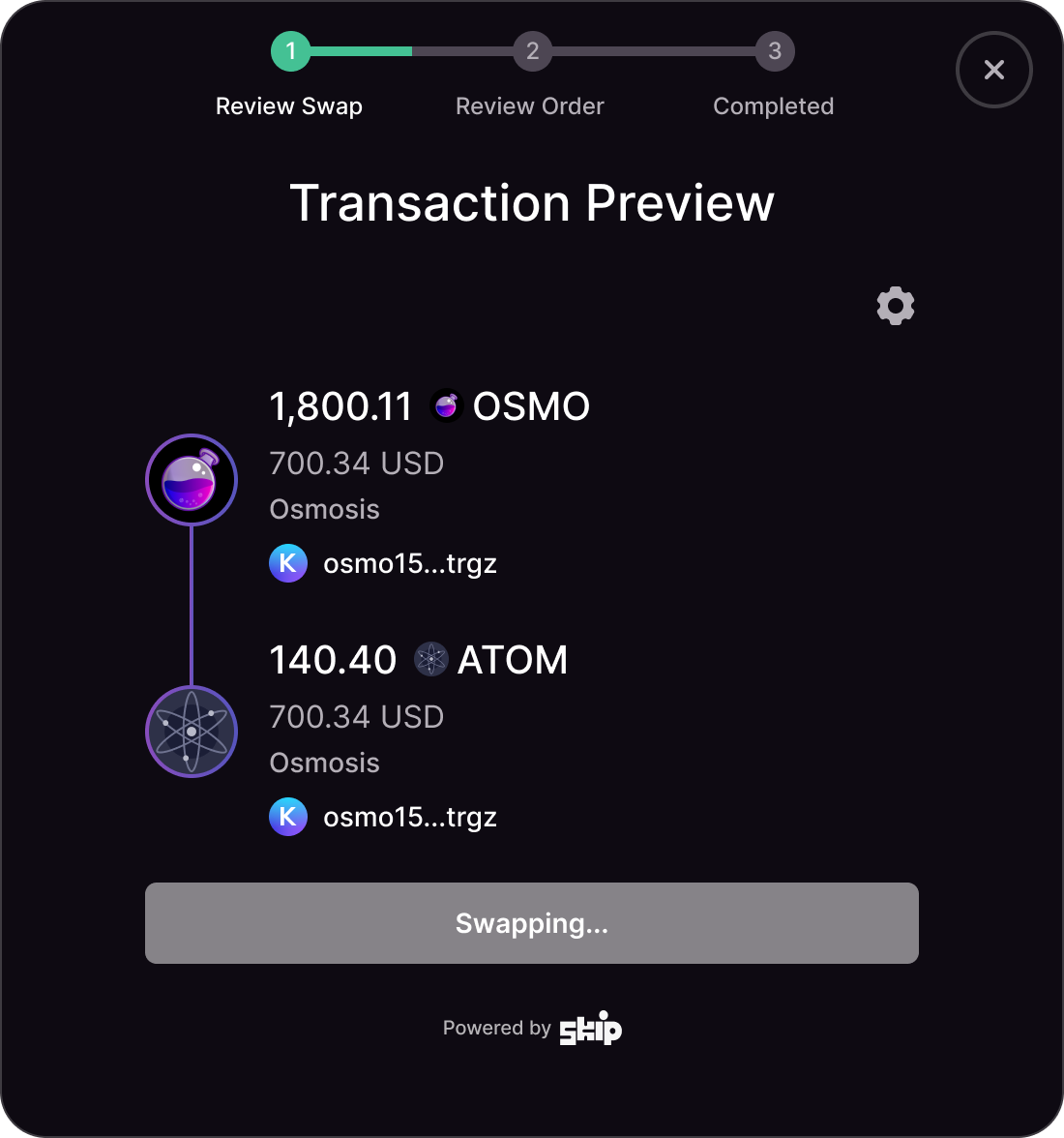
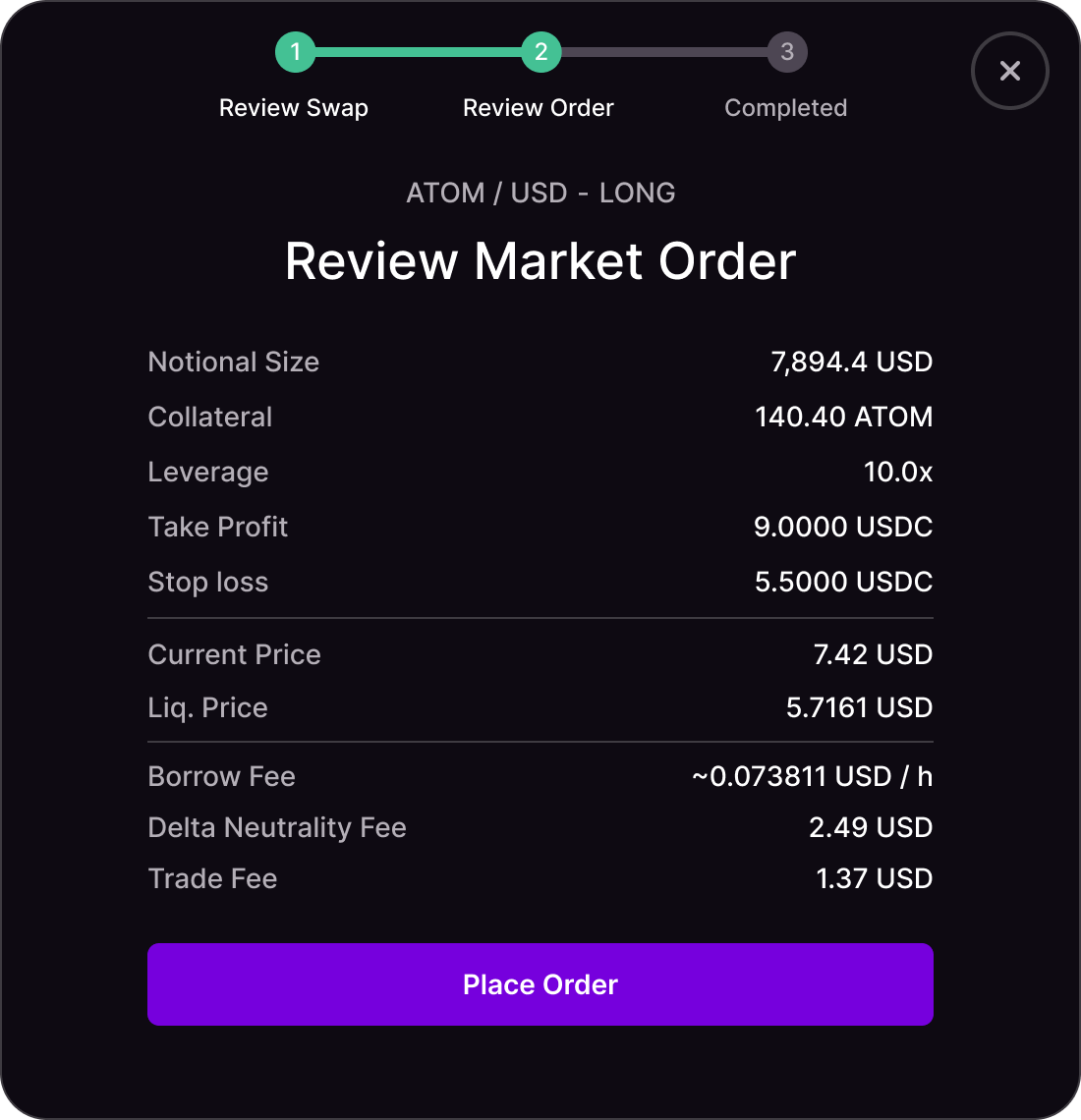
Behind the scenes, this creates a complex “Two-Step” transaction
Swap > Trade

Smart Simulation: Since the swap happens at the moment of execution, the UI simulates the position parameters (Leverage, Liquidation Price) based on the estimated output of the swap using Skip API.

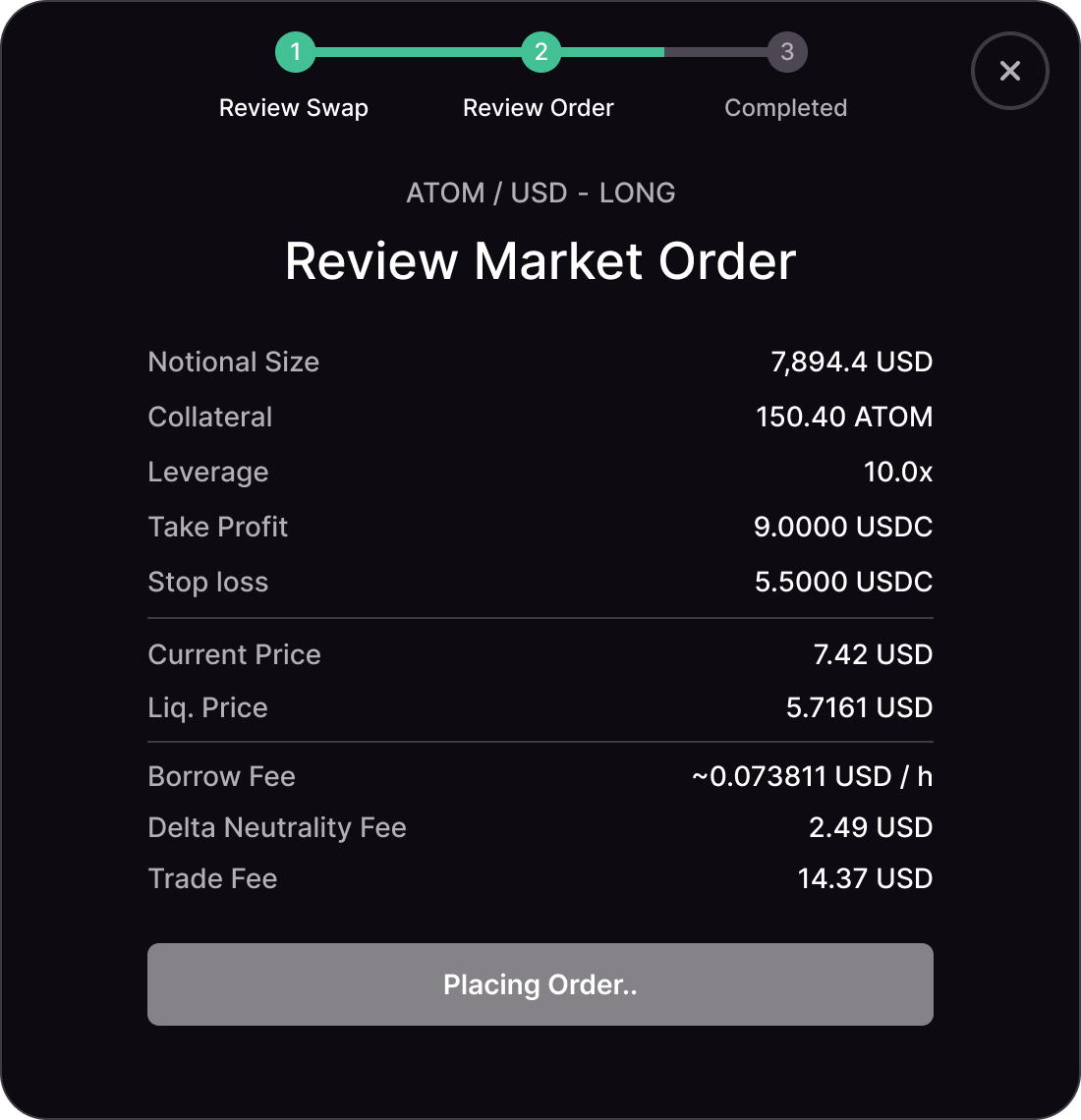
The confirmation modal breaks this down clearly after the user press the cta to “Swap & Place Order”:

Step 1: Review Swap

Step 2: Review Order ensuring the user understands the bundled action without being overwhelmed by the mechanics.

Step 3: Order is completed and will appear in the Open Orders table

Impact

The redesign contributed to measurable improvements across the product:

  • Helped scale the platform to 30,000+ users in 24 months
  • Supported $4B+ in trading volume
  • Increased trade completion rates by reducing friction in execution
  • Reduced user errors during position management
  • Improved first-time user activation through simplified onboarding
  • Increased trust and confidence in high-risk interactions

Collaboration

Worked closely with:

  • Product managers to define priorities and roadmap
  • Engineers to ensure feasibility within smart contract constraints and mechanics
  • Stakeholders in a fast-paced DeFi environment

Key Learnings

  • In financial products, clarity directly impacts user safety
  • Reducing friction is not enough — users must understand risk before acting
  • Designing for Web3 requires handling uncertainty, delays, and trust gaps
  • Strong UX can directly influence adoption, retention, and trading behavior

Final Thoughts

Designing for Levana required balancing power, speed, and safety in a highly complex system.

By simplifying critical flows and improving risk visibility, I helped create a trading experience that is not only more usable—but also more trustworthy at scale.

Design System

Building a scalable interface using Atomic Design.

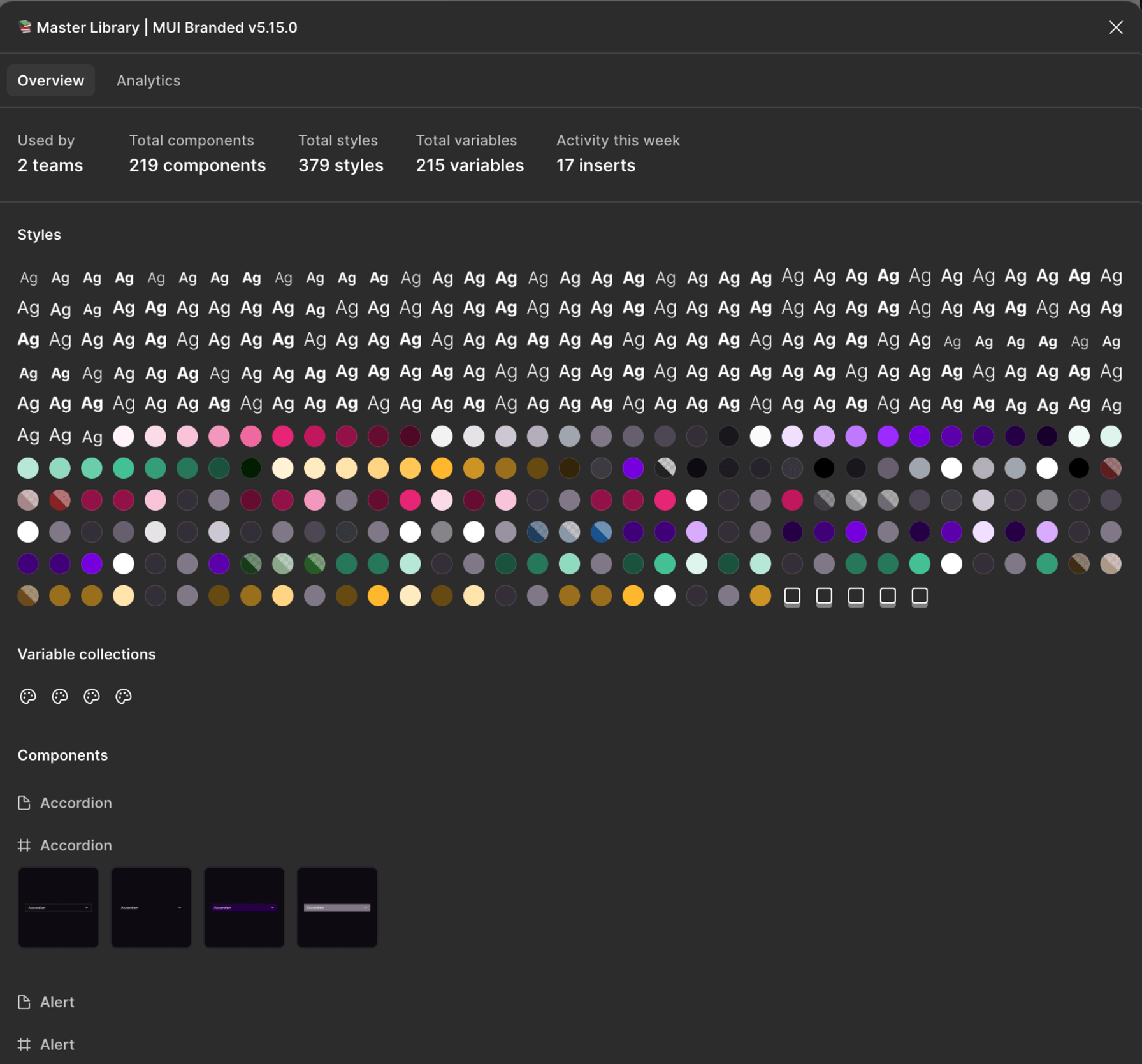
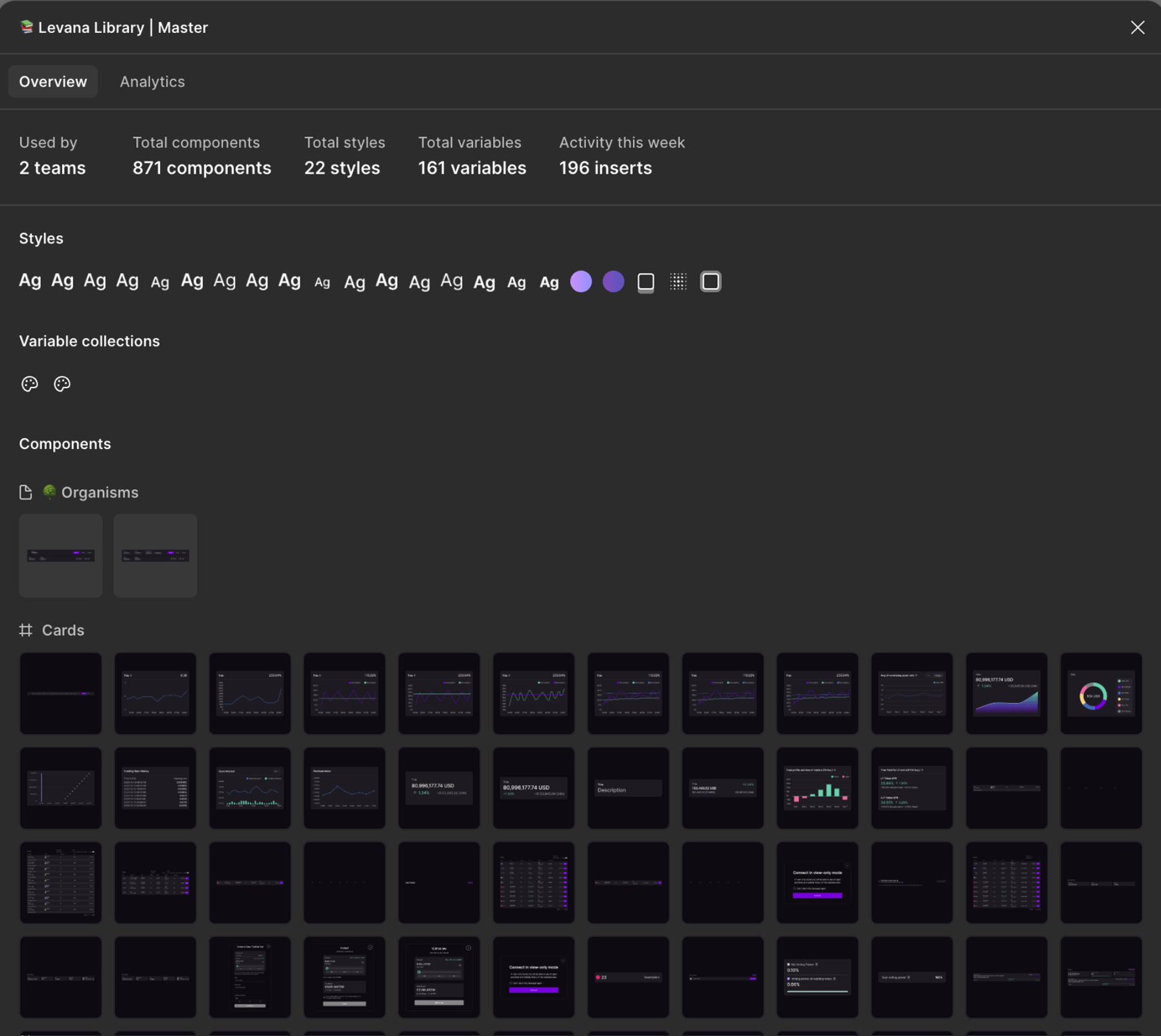
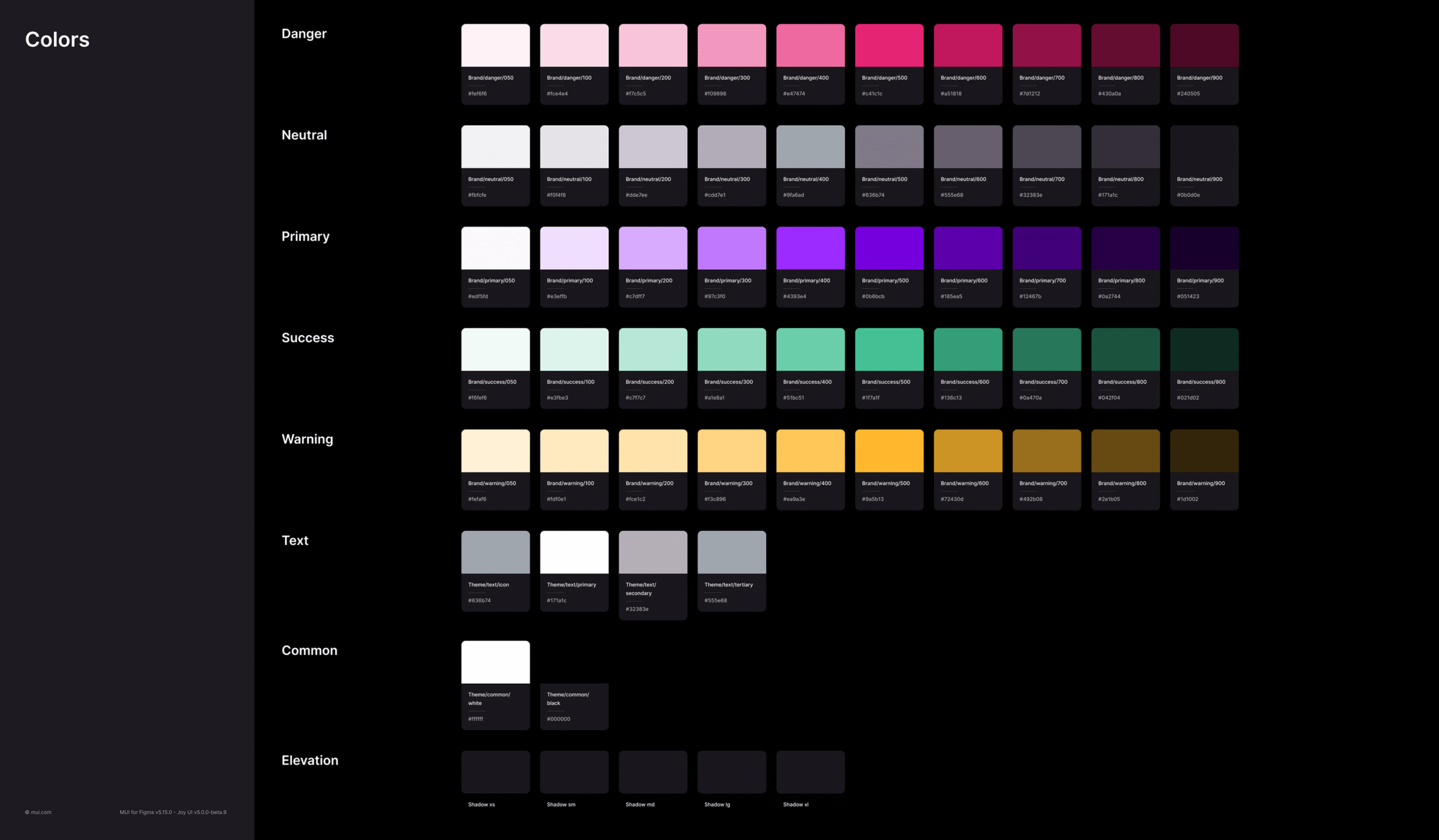
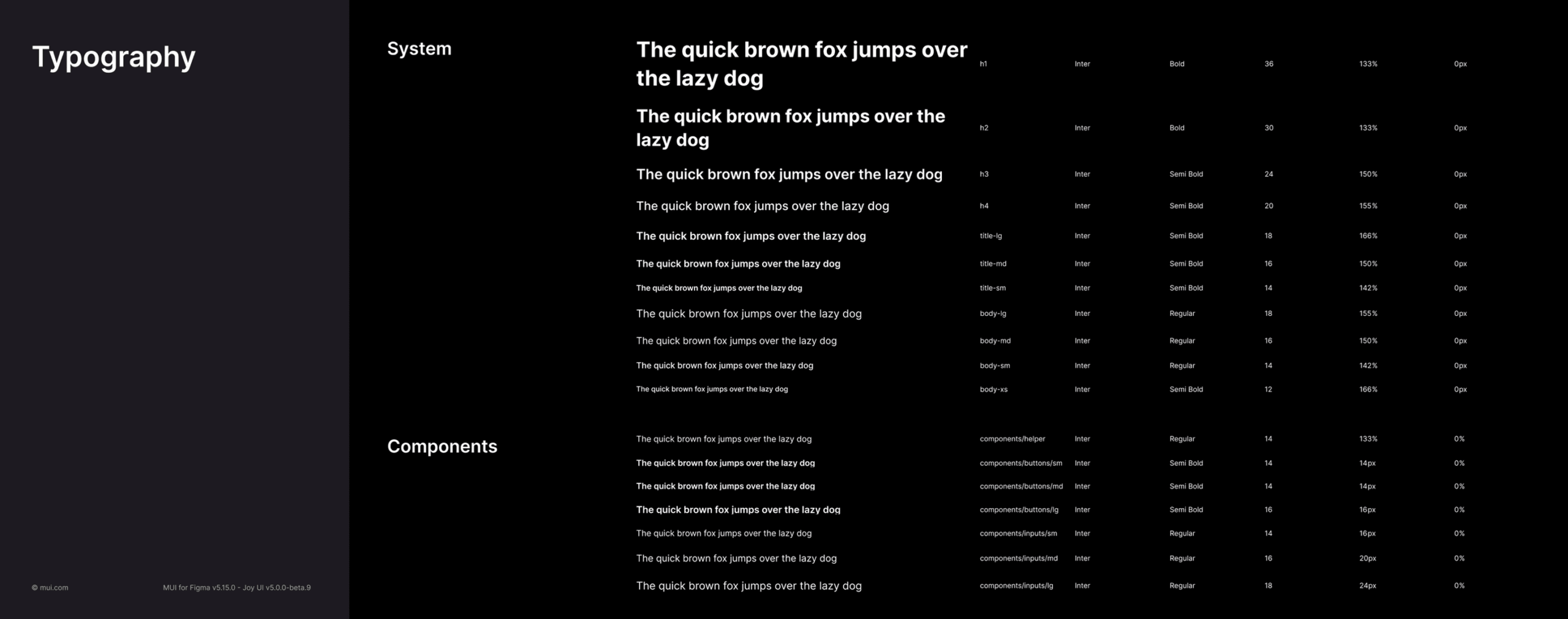
Two-tier MUI library. A Master Library holds the visual DNA — typography, color tokens, atomic primitives. A Connected Child Library extends it with trading-specific organisms: Trade Cards, Order Books, Governance panels. Shared tokens keep both libraries in sync automatically.

The Parent Library (The DNA):

Built on MUI Core. This holds all the basic building blocks—our colors, our typography, and the absolute basics.

The Child Library (The Engine):

This takes those building blocks and turns them into actual DeFi components—like Market Tables, Earn Cards and Trade Cards.

Custom Components Built

871

Linked Figma Libraries

2